Interpreting Your Secondary Progressed Chart: A Comprehensive Guide
November 30, 2024
Interpreting Your Secondary Progressed Chart: A Comprehensive Guide\n\n
Astrology offers numerous tools and techniques to understand and predict the patterns of our lives. One of the most powerful methods is the secondary progressed chart, which provides insights into personal growth and evolution over time. This comprehensive guide will help you understand and interpret your secondary progressed chart, offering deeper insights into your life's journey.\n\n
What is a Secondary Progressed Chart?\n\n
A secondary progressed chart, often referred to as a progressed chart, is a powerful astrological tool that shows the evolution of your natal chart. It is based on the concept that one day after your birth corresponds to one year of your life. For example, if you are 30 years old, your secondary progressed chart will reflect the planetary positions 30 days after your birth.\n\n
Why is the Secondary Progressed Chart Important?\n\n
The secondary progressed chart highlights the inner changes and personal development that occur throughout your life. Unlike transits, which indicate external events and influences, the progressed chart reveals the internal shifts in your consciousness and how you respond to the world around you. It can provide insights into your emotional growth, changing attitudes, and evolving life path.\n\n
 \n\n
\n\n
Key Elements of the Secondary Progressed Chart\n\n
1. Progressed Sun\n\n The progressed Sun moves approximately one degree per year. Its sign and house position reflect your evolving sense of self and core identity. Changes in the sign or house of the progressed Sun can indicate significant shifts in your life focus and personal goals.\n\n
2. Progressed Moon\n\n The progressed Moon moves through each sign in about 2.5 years, completing a full cycle in approximately 28-30 years. The progressed Moon's sign and house position reveal your emotional development and focus. Its aspects to natal and progressed planets can indicate periods of emotional growth, challenges, or fulfillment.\n\n
3. Progressed Ascendant\n\n The progressed Ascendant changes as the entire chart progresses. It shows how your outward personality and approach to life evolve. Changes in the progressed Ascendant sign can signify new ways of presenting yourself to the world and shifts in your life direction.\n\n
4. Progressed Planets\n\n All planets progress, albeit at different rates. The inner planets (Mercury, Venus, and Mars) progress more quickly and can indicate changes in communication, relationships, and personal drive. Outer planets (Jupiter, Saturn, Uranus, Neptune, and Pluto) move more slowly and signify longer-term developments and generational influences.\n\n
5. Aspects and Angles\n\n Progressed planets form aspects to your natal and other progressed planets, creating dynamic interactions that shape your life experiences. These aspects can highlight periods of growth, challenge, or opportunity, depending on the nature of the planets involved and the type of aspect (conjunction, sextile, square, trine, or opposition).\n\n
How to Interpret Your Secondary Progressed Chart\n\n
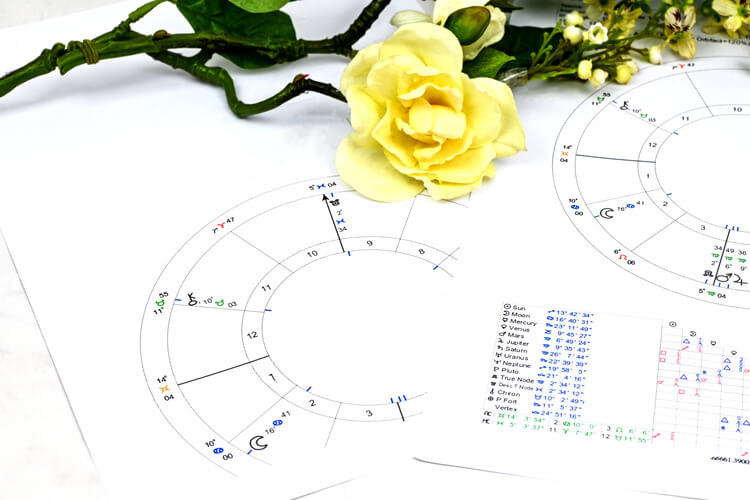
Step 1: Calculate Your Progressed Chart\n\n You can calculate your secondary progressed chart using astrology software or online tools. Ensure you have your exact birth date, time, and location for accurate results.\n\n
Step 2: Analyze the Progressed Sun\n\n Look at the sign and house position of the progressed Sun. This reveals the main themes and focus of your current life phase. For example, a progressed Sun moving from Cancer to Leo might indicate a shift from nurturing and emotional focus to self-expression and creativity.\n\n
Step 3: Track the Progressed Moon\n\n Observe the sign and house of the progressed Moon, as well as any significant aspects it forms. The progressed Moon's position highlights your current emotional state and areas of life that require attention. For instance, a progressed Moon in the 10th house could indicate a focus on career and public life.\n\n
 \n\n
\n\n
Step 4: Examine the Progressed Ascendant\n\n Note any changes in the sign of your progressed Ascendant. This shows how your outward personality and approach to life are evolving. A shift from Libra to Scorpio, for example, might indicate a move from diplomacy and partnership to intensity and transformation.\n\n
Step 5: Consider Progressed Planets and Aspects\n\n Review the positions and aspects of other progressed planets. Pay special attention to significant aspects, such as conjunctions, squares, and oppositions, which can indicate pivotal moments in your personal development.\n\n
Step 6: Synthesize the Information\n\n Integrate all the elements of your progressed chart to form a cohesive interpretation. Consider how the changes in your progressed Sun, Moon, Ascendant, and planets interact to shape your current life experience and future potential.\n\n
Conclusion\n\n
Interpreting your secondary progressed chart can provide profound insights into your personal growth and development. By understanding the evolving positions of your progressed Sun, Moon, Ascendant, and planets, you can gain a deeper appreciation of your life's journey and make more informed decisions. Whether you're an astrology enthusiast or a seasoned practitioner, exploring your secondary progressed chart is a valuable tool for self-discovery and personal empowerment.